Sterling or Silver Plate? How to Tell If Silver Is Real
A drawer of forks, a tea set, a pair of candlesticks. Some of it could be solid silver, and some is a thin coat over base metal. The marks usually tell you which, if you know how to read them.
Here is how to tell if silver is real: read the marks first. STERLING, 925 or a British lion mark point to sterling silver, which is at least 92.5% silver. EPNS, EP, "silverplate" or "quadruple plate" mean a base metal with a thin coat of silver. With no clear mark, look for wear that shows a different metal underneath, and leave any testing to a jeweler or dealer.
The marks, and what each one means
Turn the piece over. On flatware, look on the back of the handle. On a teapot, bowl or tray, look on the base, sometimes near the rim of the foot. You may need a magnifier and a lamp at a low angle. Old marks are small, and polishing wears them soft.
Most marks fall into two groups. The first group says "this is silver" and how much. The second group uses the word "silver" or the letters for it, but means plate.
| Mark | What it means | Solid silver? |
|---|---|---|
| STERLING or STER. | At least 925 parts per 1,000 silver. In the US, an item marked "sterling" must meet that standard by law. | Yes |
| 925 | The same standard written as a number: 92.5% silver. | Yes |
| Lion passant (a walking lion) | The traditional British mark for sterling. Optional on British silver since 1999, standard on older pieces. | Yes |
| 958 or a seated Britannia figure | Britannia standard, 95.8% silver. Higher than sterling. | Yes |
| 999 | Fine silver, 99.9%. | Yes |
| 800 | 80% silver. One of the standards the UK accepts today. Solid silver, but less silver than sterling. | Yes, lower grade |
| COIN | Coin silver, 900 parts per 1,000 under US law. Common on American silver made before sterling took over in the later 1800s. | Yes, see note below |
| EPNS | Electro-Plated Nickel Silver: a thin layer of silver over nickel silver, an alloy of copper, nickel and zinc. | No, plated |
| EP | Electroplated. A silver coat over a base metal. | No, plated |
| "Silverplate", "Silver plated", "Quadruple plate" | Plated ware. "Quadruple" describes the plating, not the silver content of the piece. | No, plated |
| "Nickel silver", "German silver" | Names for the copper-nickel-zinc alloy. It contains no silver at all. | No silver |
Standards from US law (15 U.S.C. §296) and the UK assay offices. A note on COIN: pieces marked "COIN" before the 1906 US stamping law were not held to a federal standard, so their silver content can vary.
One trap: US law bars silver-plated items from being marked "sterling" or "coin", but that only helps if the maker followed it. A mark is a strong clue, not proof. Forged and transplanted hallmarks exist, so an expensive-looking piece deserves a second opinion before money changes hands.
Reading a British hallmark
British silver usually carries a row of small stamps rather than a single word. Today, three are compulsory:
- Sponsor's mark. The registered maker or the firm that sent the piece for testing, usually initials in a shield.
- Fineness mark. A number in a shield, such as 925 for sterling.
- Assay office mark. Where it was tested: a leopard's head for London, an anchor for Birmingham, a castle for Edinburgh. Sheffield uses a rose today. On older Sheffield silver you'll see a crown.
Two more marks are now optional but appear on most older pieces. The date letter changes every year. Since 1975 all four UK offices use the same letter, but older letters differ from office to office. The letter's font and shield shape matter too, so look it up in a date-letter table for the right office. The lion passant, the walking lion, has meant sterling since 1544.
That system exists because in the UK, silver is tested by an independent assay office before it's marked, and has been for centuries. Very light items, under 7.78 grams, don't need a hallmark at all, so a tiny unmarked piece isn't automatically plate.
American silver: the maker's word
The US has no national government assay or hallmarking system. American marks are manufacturers' marks: the maker's own claim about the metal.
That claim is controlled by the National Gold and Silver Stamping Act of 1906. The law doesn't require a purity mark. But if a maker does stamp "sterling" or "925", the metal must meet the standard, and since 1961 the quality mark has had to go with the maker's registered trademark. So on American silver you'll typically see a maker's name or symbol next to STERLING, and often a pattern name.
Before sterling became the American norm, from about the late 1860s and 1870s, silversmiths worked to the coin standard. That's why older American spoons may say COIN, or carry only a maker's name.
For looking up a specific maker, 925-1000.com is a free online encyclopedia of silver and silverplate marks.
No clear mark? Four things to check
Marks get polished away, hidden under monograms, or were never there. These checks narrow things down. None of them proves anything on its own.
1. Wear on the high spots
Plate is a thin coat. Where a piece gets the most handling, like the backs of spoon bowls, the tips of fork tines, knife edges, the feet of a teapot, the plating can wear through. If you see a yellowish, coppery or grayish metal showing through the silver color, it's very likely plate. Solid silver is the same metal all the way through, so worn sterling is still silver-colored where it's worn.
2. A magnet
Silver isn't magnetic. If a strong magnet (a fridge magnet is too weak) grabs the piece firmly, there's iron or steel in it, so it's probably not solid silver all through. Weighted bases and steel knife blades are the exceptions. Be careful with the result the other way round: copper, brass and nickel silver don't grab a magnet either, so no pull does not mean the piece is silver. Knives are a special case, since sterling handles often hold a steel blade.
3. Weight and feel
People expect sterling to feel heavy. Sometimes it does, but this check misleads in both directions. Heavily plated hotel silver can be hefty. Sterling candlesticks and knife handles can be hollow or filled, so they may be light, or heavy for the wrong reason. Use weight only as a hint.
4. Tarnish
Tarnish tells you less than people think. The surface of silver plate is real silver, so it tarnishes too. Green or reddish spots, though, can come from copper in a base metal showing through worn plate.
Home test kits usually mean filing or scratching the piece so a chemical can react with the metal. That leaves a mark, and a damaged surface can cost you more than the test tells you. If a piece might be worth selling, leave any testing to a jeweler or dealer.
Before you sell or scrap anything
If you've confirmed sterling, the tempting next step is to weigh it and sell it for its silver content. Pause first.
- Check the maker and pattern. Some makers and patterns can sell for more as silverware than as metal, especially complete sets and serving pieces. Search the maker and pattern name on eBay with the Sold filter on, and compare with the scrap value before you decide.
- Keep sets together. A complete service in its original chest may appeal to buyers who would never want odd pieces. For many sets, completeness is part of the value.
- Be realistic about plate. Silver plate has little or no value as silver. Some plated pieces still sell as decorative items, but don't expect much from a scrap dealer.
- Get a professional view on anything special. Early British pieces, known American silversmiths, or anything with a family story attached are worth a second opinion before they're melted.
If this drawer is part of a bigger job, our guide to clearing a parent's house covers what else to check before anything goes. And if you're unsure whether a marked piece is period or a later copy, see antique or reproduction?
Photographing the marks
Hallmarks are tiny, shiny and often worn, which makes them hard to photograph. Use daylight from the side rather than a flash, which bounces straight off silver. Hold the phone a little further away and crop, rather than going so close it can't focus. Take the whole piece as well as the marks: the shape, weight and wear matter as much as the stamp. Our guide on how to photograph antiques has more.
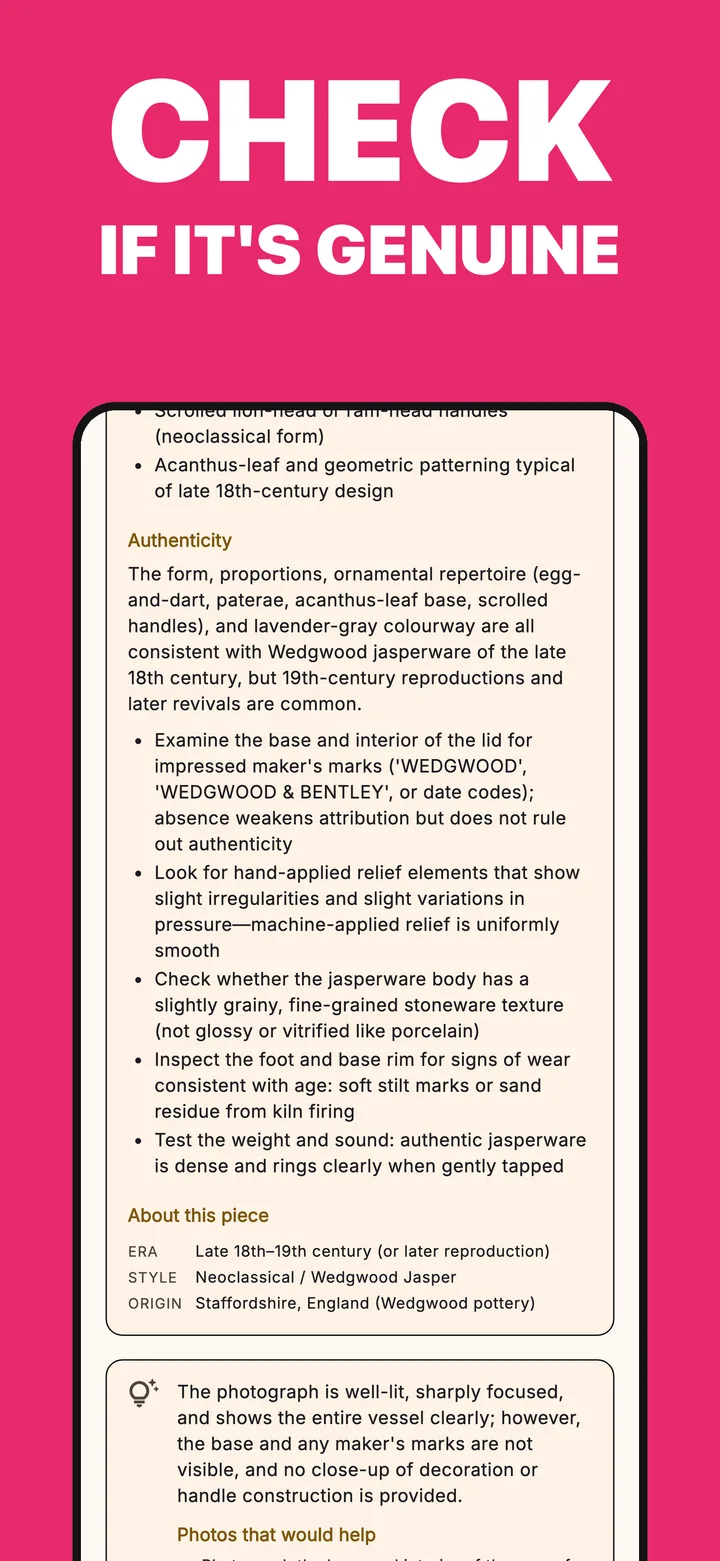
Vintio is an antique identifier app for iPhone. If you'd like a second pair of eyes on a piece, photograph the whole piece and the hallmark, plus a close-up of any wear, and add a note if you know where it came from. Vintio doesn't look marks up in a database. It looks at the piece and the mark together, and gives you what it likely is, a rough era and origin, and an estimated value range with the reasons behind it.
It also lists signs to check, such as what the marks and wear should look like, and tells you which extra photo would help when it isn't sure. For anything that looks valuable, it tells you to get a professional appraisal before you sell. Download Vintio on the App Store. The first 3 identifications are free.
Frequently asked questions
What does 925 mean on silver?
925 means the metal is 925 parts per 1,000 silver, or 92.5%. That is the sterling standard. In the US, an item marked "sterling" must meet it by law. In Britain, 925 appears in the fineness mark as part of a hallmark.
What does EPNS mean?
EPNS stands for Electro-Plated Nickel Silver. The body is nickel silver, an alloy of copper, nickel and zinc that contains no silver, with a thin electroplated layer of silver on top. It is silver plate, not solid silver.
Does a magnet stick to sterling silver?
No. Silver isn't magnetic, so if a strong magnet grabs a piece firmly, it contains iron or steel and probably isn't solid silver all through (weighted bases and steel knife blades are the exceptions). But the reverse doesn't work: brass, copper and nickel silver don't attract a magnet either, so a piece that doesn't stick isn't proven to be silver.
Is silver plate worth anything?
As metal, very little. The silver layer is thin, so plate has little or no scrap value. Some plated pieces still sell as decorative or useful items, especially attractive serving pieces. Check sold listings for your maker and pattern before you give it away.
Updated September 25, 2026. Silver standards come from US law (15 U.S.C. §296 and the FTC Jewelry Guides) and the UK assay offices. Vintio gives AI estimates for guidance, not professional appraisals.

Not sure what's in the drawer?
Photograph the piece and its marks. Vintio gives a likely identification, an estimated range with its reasons, and the signs to check before you sell or scrap it.

On a computer?Scan to get it on your iPhone.
Free to download · 3 free identifications · Pro is $4.99/week with a 3-day free trial, or $39.99/year · iPhone, iOS 15+